Best time for Northern Lights in Norway
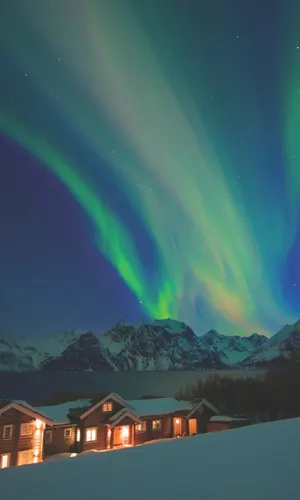
Norway is one of the best places in the world to see the Northern Lights. Above the Arctic Circle, many towns and cities offer excellent chances to witness the lights from mid-September to early April.
Our staff will respond to your query promptly and provide detailed information to your questions.
4 days - Seeing is believing - these islands are magical.
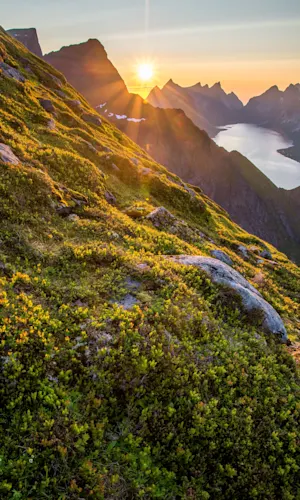
Ready for an authentic experience in the Lofoten Archipelago - our secret gem in the Northern part of Norway. Laid out against ocean blues and greys, Lofoten's razor-sharp peaks poke dark against a clear, cobalt sky. In the pure, exhilarating air, there’s a constant tang of salt and, in the villages, more than a whiff of cod, that giant of the seas whose annual migration brings wealth. It's a dream for hikers, fishermen and all nature lovers.
The Lofoten Islands are located just north of the Arctic Circle where you find the sea on one side and the dramatic mountains on the other, offering great views everywhere you look. The archipelago offer a number of activities, such as walking, Northern Lights evening tours, sea safaris and much more. Lofoten is one of our favourite destinations along the long Norwegian coast.
As a Certified B Corporation, 50 Degrees North has designed this tour using handpicked local hoteliers and suppliers who share our ethos of delivering services and activities of high social and environmental standards.
The CO2-e per person per day of all tours is carefully measured following each season. We fully offset all emissions of our tours on your behalf, and we constantly look at ways to reduce emissions where possible.
Transfers to your rorbu (fisherman's cabin)
International flights, meals and items of personal nature.
On arrival in Svolvær you check into your own Rorbu (fisherman’s cottage) on stilts over the clear blue water. Just outside the vibrant fishing village, you will stay in cozy and comfortable rorbu cabins with kitchen, lounge and bedrooms. The rorbu cabins are idyllically located between the fish landing station, quayside buildings, fish racks and old local buildings. You will have the open ocean on one side, and the spectacular Lofoten mountains on the other.
After breakfast, experience nature and the winter light of Lofoten with a local guide. Snowshoeing is an easy way to get close to nature, enjoy intriguing stories during easy walks in the magical landscape.
During the autumn months, the activity will be exchanged to sea kayaking.
In the evening, join an aurora chase with an experienced local guide and photographer. Taking pictures of the Northern Lights can be challenging, but the guide will give you all the tips and show you how to take your own Northern Lights photos. The guide will also take photos of you and send them to you after your trip so that you have the best memories possible.
"The open sea, the steep mountains, the fresh air and crystal clear water…. an experience that never lets go."
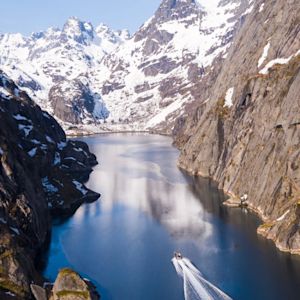
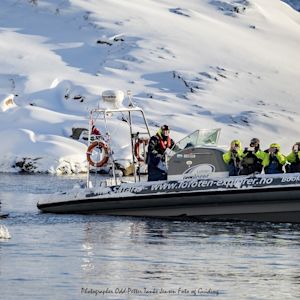
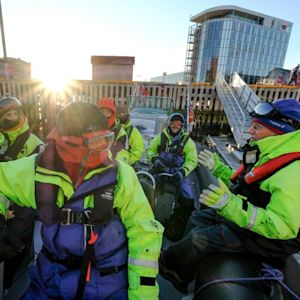
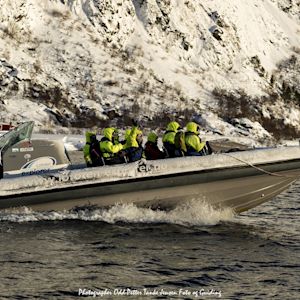
Today, enjoy a sea eagle safari by boat and visit the narrow waters of the Trollfjord. Be surrounded by mountains rising 1000 metres directly from the ocean. You are likely to experience sea eagles at close range as you venture into spectacular nature spots. Kitted out in a warm floating suit, the RIB boat speeds across the waters, stopping for photos of the white sandy beaches of Lofoten, the panorama view over the Svolvær town and the majestic mountain, Fløya, and Svolværgeita.
After breakfast, transfer to the airport or continue your adventure. If a Hurtigruten voyage interests you, you can join one from this small Lofoten village travelling north or south.
Price per person, twin share, sharing a double room. For last minute bookings: prices are subject to availability.
Supplements may apply over Christmas and New Year period.
For tours when there is no snow on the ground, the activity will be sea kayaking. This can be adapted or changed depending on your activity level.
IMPORTANT NOTE: Weather conditions may occasionally affect certain activities, and as a result, the schedule may be adjusted to ensure the best possible experience for all guests. For multi-activity stays, often the order of the activities will be confirmed locally on arrival. Activities might vary slightly in their duration or location due to the weather and local conditions. Any activities that are unable to be re-scheduled due to weather conditions will be refunded as a general practice, as determined by the activity provider.
Norway is one of the best places in the world to see the Northern Lights. Above the Arctic Circle, many towns and cities offer excellent chances to witness the lights from mid-September to early April.
Scandinavia and Finland are the incubators for innovative ways to spend your leisure time relaxing and restoring your body. Add a special note to your tour by booking a floating hot tubs in the Copenhagen harbour, gondola saunas in the SkyWheel of Helsinki and floating saunas throughout Sweden and Finland.
Meeting indigenous Sàmi people in Norway, Sweden and Finland is at the heart of meaningful, authentic and experience-rich travel. Take a look at some of our suggestions for how and where to meet and learn more about the only indigenous people of the European Union.
Travel insurance is compulsory for all tours with 50 Degrees North. The safety of our travellers, staff and operators is a major priority of 50 Degrees North. With an operational office in Norway, 50 Degrees North has access to an up-to-the-minute flow of information regarding the countries we work in. We are also in regular contact with the various operators we use. Their in-depth knowledge and understanding of their various areas is vital.
Beds and room types. Hotel rooms across Scandinavia are typically furnished with twin beds that can be pushed together to form a double. Single rooms tend to be smaller than doubles and usually have a shower rather than a bath. Purpose-built triple or family rooms are uncommon. If three people are sharing, expect a standard double room with an extra bed added, which means noticeably less space than a purpose-built triple would offer.
Luggage. Porters are rare at Scandinavian hotels. You will generally carry your own bags, so pack with this in mind, particularly on itineraries with frequent hotel changes.
Wi-fi. Free wi-fi is standard across the vast majority of Scandinavian hotels at all price points.
Tea and coffee. Unlike hotels in many other parts of the world, Scandinavian accommodation at the 3-star level rarely provides in-room tea and coffee facilities. There may be a kettle, but often nothing to go with it. Many hotels do offer complimentary tea and coffee in the reception area or lobby, so it is worth asking on arrival. If this matters to you, it is worth checking with us beforehand or bringing a small supply of your own.
Lunch in winter. On itineraries that include lunch during the winter months, expect a warm soup with bread rather than a full cooked meal. This is entirely typical across the region and often very good.
Remote hotels in Lapland. At more remote properties in the far north, the hotel or lodge where you are staying will be your only realistic dining option for dinner. This is entirely normal and nothing to be concerned about. Menus are typically limited to one or two main course choices, but the food is generally home-cooked and reflects the local landscape and ingredients well.
Laundry. Self-service washing machines and dryers are typically located in the basement. If you are staying in apartment-style accommodation and cannot find them, ask at reception.
Norway has a few items that typically surprise first-time visitors. Alcohol and luxury goods are heavily taxed, so prices are higher than you might expect. On the other hand, everyday necessities such as bread and milk are taxed at a lower rate and are generally good value. Eating and drinking out, particularly in restaurants and bars, is where most travellers feel the difference most acutely.
If you enjoy a drink, it is worth bringing your full duty-free allowance into Norway when you arrive. Alcohol bought in Norway is significantly more expensive than in most other countries, and there are many lovely parks, hotel terraces and balconies where you can enjoy what you have brought with you.
Current allowances for travellers entering Norway are set by Norwegian Customs. For the most up-to-date figures, check the official allowances at toll.no before you travel, as these are subject to change. As a general guide, the current duty-free quota for spirits, wine and beer follows a tiered system that allows you to mix and match within set limits. Note that beverages with more than 60% alcohol by volume cannot be imported at all, and you must be over 20 to import spirits above 22% ABV.
It is illegal to bring more than the permitted allowance into Norway without declaring it and paying duty. Customs checks do occur, particularly at ferry and land border crossings.
One thing that catches many travellers by surprise is the cost of razor blades. Good quality razor blades in Norway are expensive compared to most countries, so it is worth stocking up before you arrive.
This is a general packing checklist for Scandinavian winter travel. You don’t need everything every day, but these items cover most winter conditions across the region.
If you’re new to winter travel, start with our guide to travelling in Scandinavia during winter to understand what conditions are really like. For practical advice on managing luggage and day-to-day winter travel, see our Lapland winter packing advice, and for detailed guidance on what to wear and how to layer, read our Snow Clothing Essentials guide.
Outer layers
Base and mid layers
Accessories for warmth
Footwear
Everyday and practical items
Health, documents and electronics
Sun and eye protection
Written by Jayde Kincaid, an Australian who married a Norwegian, and was happily (albeit with some hesitation) introduced to a world of Norwegian every day food habits.
At 50 Degrees North, we want to encourage our travellers to try local Norwegian food and drink. This may seem daunting in Norway, where restaurants and cafés can be expensive and some of the more remote villages have limited options. There is certainly no street food. One of the best ways to sample local flavours without stretching the budget is by self-catering. You will find friendly locals in small town grocery stores and supermarkets who are happy to help you pick out ingredients. Don't be shy, ask. And don't rush: make the local supermarket part of your holiday experience. Read the notice boards, and enjoy an ice cream out the front when you have finished. It is what the locals do.
Note: Statoil cups - Circle K petrol stations sell a reusable travel cup that gives you free refills of coffee, tea and hot chocolate at any Circle K station. A handy way to save money as you drive around Norway.
Norway has an extensive range of grocery stores, and in most small villages you will find at least one, sometimes two or three. Opening hours are limited, and most chains are closed on Sundays, with the exception of Bunnpris. Weekend hours are usually displayed in brackets on the sign out front. If you are heading into the mountains or along a remote coastal route, stock up with staples before you leave a larger town.
A few tips:
Meatballs or “meatcakes’: these come in all shapes, sizes and quality. They are generally really tasty, a step up from what you find at IKEA. Pick up a packet of dried ready-made brown sauce to go with them, and look out for lingonberry sauce or jam to serve alongside. Lingonberries are the little red circular berries served quite tart. If you want to make the brown sauce yourself, buy some brunost (brown cheese) and follow the recipe at the bottom of this page.
Hotdogs: known as pølse in Norwegian, hot dogs are the definitive fast food of Norway. They are sold at petrol stations, newsagents, corner stores and fast food outlets, and come with a dazzling variety of toppings and breads. Highlights include the bacon-wrapped variety sprinkled with dried onion, mustard and mayonnaise. You will also find them wrapped in waffles, mostly in and around Fredrikstad, or in lompe, the Norwegian flatbread pancake. Like Norwegian beer, pølse comes in seasonal varieties, with Christmas pølse (julepølse) appearing in the weeks before the holidays. Steer away from the tinned varieties.
Fish cakes: these come in many variations and are generally served with a white sauce and plenty of parsley. Often found in fish shops, fried or steamed and ready to eat. A great quick snack.
Reindeer: if you are travelling in the far north, try reindeer meat. It generally comes frozen, so look for finely cut reindeer in the freezer section. It is more expensive than other meats but absolutely delicious, if quite gamey. Fry it with mushrooms, a little brown cheese and rømme (crème fraîche), a bit like a beef stroganoff. Serve with boiled potatoes or rice.
Mushrooms: if you are travelling during the chanterelle season in mid to late August, look for the yellow mushrooms in the pine forests. You can pick them yourself, but image search them first so you know what you are looking for. They are wonderful with the brown cheese sauce and reindeer.
Salmon, prawns & fish: always look out for a chance to buy fresh fish. Look for local fish kiosks or fish shops, or small roadside signs pointing to fresh fish sales. The words to look for are reker (small shrimps, not prawns) and fersk fisk (fresh fish). Norwegian shrimps are small, sweet and harvested from the cool North Sea. Peel them and pile them on fresh white bread with mayonnaise, dill, pepper and salt. Norwegian smoked salmon is exceptional. Try the different varieties where you can, and in larger supermarkets or delis you can often taste before you buy.
Tubed ‘kaviar’ (caviar): cheap, practical and a genuine Norwegian staple. This is the thing Jayde's Norwegian husband craves the way an Australian abroad craves Vegemite.
Pre-made dips and salads: Norwegian supermarkets carry a wide range of premade salads and dips with a reasonable shelf life, ideal for sandwiches and picnics. The cubed beetroot salad and potato salads are particularly good. They come in easy-to-carry containers and tubed mayonnaise travels well too. Leverpostei (liver pâté) is also worth trying, served on brown bread with sliced red onion or sweet pickles. It is found on most Norwegian breakfast tables.
Yoghurt: a small warning here. Norwegian yoghurt comes in styles ranging from thick and creamy to very runny and sour. The runny variety sometimes comes in a carton that looks exactly like a milk carton. Sour runny yoghurt is not nice in your coffee. When in doubt, ask a local.
Bread: supermarket bread in Norway generally comes uncut. There are bread cutting machines near the bakery section in most stores, and staff are happy to help the first time. The bread can be fairly plain in the main supermarkets, so look for boutique bakeries in larger towns if you enjoy something more interesting. Keep an eye out for lefse, the Norwegian flatbread similar to a soft tortilla, usually served with butter and sugar, sometimes with cinnamon, and occasionally made with potato.
Waffles: Norwegian waffle stalls are the equivalent of a sausage sizzle. They are the most common community fundraising food and turn up everywhere. Do not expect sweet jam and whipped cream. These are fresh, chewy waffles served with sour cream and homemade tart berry jam. Never walk past one.
Chocolate: try Freia milk chocolate while you are here. It is genuinely excellent.
Berries: in early autumn, roughly mid to late August, the forests come alive with berries. Ask a local where to look and head up into the hills. You may find blueberries, lingonberries, raspberries, and if you are in the far north or the central mountains, the rare and prized yellow cloudberry.
On a self-drive journey, always slow down for small farm shops and roadside stands.
Strawberries: if you are travelling during strawberry season, stop. Norwegian strawberries, grown in soil that has rested through a long winter, are extraordinary. If you pass a self-pick farm, put everything else on hold and go in. Norwegians wait all year for this.
New potatoes: look for new season potatoes sold in small stands beside the road, often on an honesty system where you take a bag and leave the money in a tin.
CLASSIC RECIPE: brown cheese sauce
Basic Brown Cheese Recipe – can be used with meatballs, reindeer, with added mushrooms.
• 2 tablespoons butter
• 2 tablespoons flour
• 3⁄4 cup light cream
• 1⁄2 cup chicken broth (optional - just use water if you cannot find this)
• 1 cup shredded gjetost or brown goats cheese
• 3⁄4 cup rømme (crème fraiche)
• 2 tablespoons chopped parsley or 2 tablespoons fresh dill
Using the pan from your browned meat, remove as much oil as possible and blend in the butter and flour over heat. Remove from heat and blend in the cream. Add the broth, return to heat and bring to the boil, stirring until thickened. Mix in the gjetost. Turn the heat to low. Blend a little of the sauce into the rømme to temper it, then stir it all back into the pan. Add the parsley or dill and serve.
Happy shopping and cooking!