
There is a reason the Nordic region feels different

Helsinki, Gothenburg and Copenhagen lead the world's most rigorous destination rankings. Here is what that means for anyone planning a trip to Scandinavia, Iceland or the Faroe Islands.
There is a particular kind of travel disappointment that is hard to describe until you have experienced it. You arrive somewhere you have always wanted to see, somewhere you have looked at in photographs for years, and it is exactly as beautiful as you imagined. But it is also full of people who had the same idea, the same photograph, the same afternoon. The thing you came for is technically still there. It is just harder to find underneath everything else.
Norway, Finland, Iceland, Sweden, Denmark and the Faroe Islands are not immune to this. The most famous fjords in Norway, the main streets of Reykjavik, certain waterfalls in Iceland that now have car parks, these places draw crowds because they deserve to. But the Nordic region contains far more than the images that draw people to it, and the difference between the well-worn path and the one beside it is often surprisingly small. Part of the reason for this lies in how these destinations are managed, and on that measure, the Nordic region has few peers.
Why Nordic cities keep topping global destination rankings
Every year, the Global Destination Sustainability Movement publishes a ranking of cities assessed on the quality of their tourism management, the standards of their local suppliers, the health of their communities, and the state of their natural environment. It is a rigorous, data-driven exercise, and their most recent results tell a consistent story.
Six of the world's top ten cities are Nordic. Helsinki leads at 93.52%. Gothenburg, Copenhagen, Aalborg, Tampere and Aarhus follow. Reykjavik sits tenth. Stockholm 24th. The Faroe Islands 30th.
You could read this as a story about environmental policy, and it partly is. But it is also a story about why Scandinavia and the wider Nordic region still feel worth the journey.
Destinations that score well on this kind of index tend to share certain qualities that travellers notice without necessarily being able to name. The food tastes like it came from somewhere nearby. The hotel feels like it belongs to the landscape rather than being dropped into it. The guide who takes you out into the wilderness actually grew up near it, and can read the weather, the wildlife and the terrain in ways no itinerary can replicate. You are not being funnelled through a system designed to process tourists efficiently. You are somewhere that has thought carefully about what it wants to be, and has managed to remain that.
This is not an accident. It is the result of decades of policy, investment and local decision-making. And the traveller is the beneficiary.

What Helsinki being the world's top-ranked destination actually means for visitors
Finland's capital scoring nearly 94% on a global destination management index is not simply a civic achievement. For someone planning a trip to Helsinki, it means arriving in a city that functions beautifully, where public spaces are genuinely public, where the design of everyday life reflects a long-standing culture of quality and restraint, and where the gap between tourist Helsinki and local Helsinki is smaller than almost anywhere else.
It also means eating extraordinarily well. Finnish food culture has undergone a quiet transformation over the past two decades, from a cuisine largely defined by practicality and preservation to one that has reconnected with its foraging and farming traditions. The restaurants worth going to are not the ones performing Finnishness for visitors. They are the ones that have always been there.
The same logic applies across the region. Copenhagen's food scene became world-famous, but what made it world-famous was a commitment to Nordic ingredients, seasonal rhythms and local producers that preceded the fame by many years. Gothenburg has built one of Europe's most interesting restaurant cultures on similar principles. These cities are not trying to impress you. They are simply very good at being themselves, and that turns out to be compelling.
Norway: what the rankings look like on the ground
What the rankings measure in policy terms, Norway makes visible in practice.
Kalvåg, a small cod-fishing village on the west coast, is described as one of the best-preserved fishing communities in the region. Little wooden houses cluster tightly around a small bay. The ferry from Bergen stops here as it does for locals, dropping off supplies and picking up passengers before continuing north. The village has not been reorganised for visitors. It simply continues to be what it has always been, and that, it turns out, is exactly what makes it worth visiting.

Further north, the fishing village of Henningsvær sits on a cluster of small islands in Lofoten, connected to the main archipelago by a road that runs out across open water. It has galleries, good restaurants and a quiet intensity that some of Lofoten's more photographed villages have gradually lost to visitor volume. Arriving here by coastal ferry, watching the mountains rise from the water as the boat moves north, is one of those experiences that resists easy description.

The fjords themselves need no defence. What they benefit from is knowing which ones to visit and when. Nordfjord, long and deep on the west coast, sits in the shadow of better-known neighbours but rewards unhurried exploration. Hjørundfjord, near Ålesund, sees a fraction of the traffic of the more famous fjords to its south and offers the same drama with considerably more quiet.

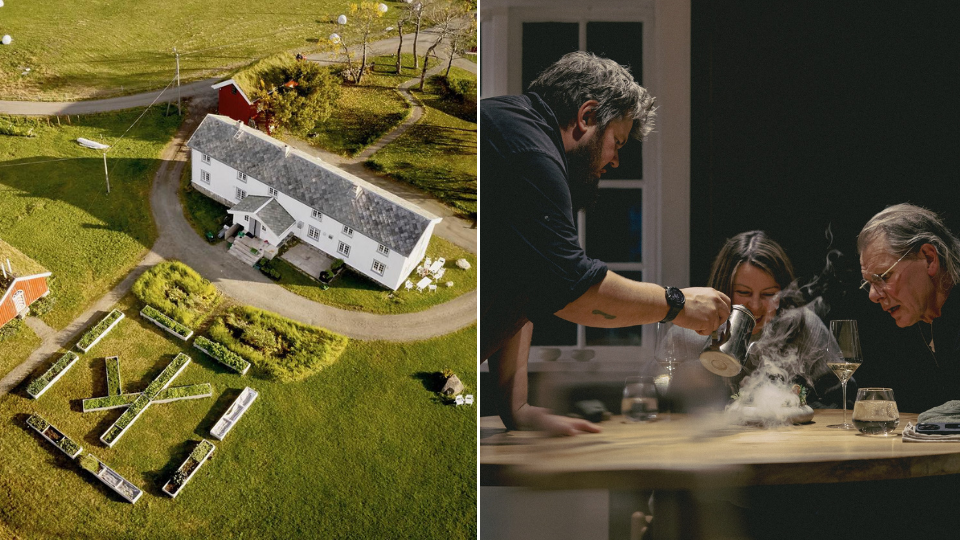
And then there are places like Kvitnes Gård, a remote farm in Vesterålen where chef Halvar Ellingsen, named best international chef 2025 by the Italian culinary magazine Identità Golose, raises, fishes and cultivates almost everything that reaches the plate. It is a place that could only exist in a country where local food systems, environmental care and community have remained genuinely connected. The rankings reflect that connection. The meal makes it real.
The Faroe Islands: a destination that asks something of you
At 30th on the index, the Faroe Islands might not grab attention on the ranking alone. But no destination in the world has thought more carefully about what it wants from its visitors, and what it is willing to offer in return.
The islands have closed themselves to tourists for weekends, asking visitors to return another time while locals carry out conservation work on the trails and coastline. They have invited visitors to participate in that work as a condition of accessing certain areas. They have placed strict limits on cruise ship arrivals, because the maths of a ship delivering thousands of people to an island community of 50,000 residents simply does not work in anyone's favour.
These are not policies designed to attract more tourists. They are policies designed to protect what makes the islands worth visiting in the first place. Eighteen islands in the North Atlantic, producing some of the world's most distinctive food, music and design. The ranking reflects the seriousness of that intention. The experience of being there confirms it.

Iceland: a destination learning to manage what it started
Reykjavik sits tenth in the global rankings, reflecting strong governance, high supplier standards and genuine investment in the infrastructure of tourism. Iceland as a whole is a more complicated story, and an honest one.
The past decade brought a wave of visitors that arrived faster than the country could absorb them, and the south coast and Golden Circle felt the pressure of that. Iceland has responded, not always quickly or perfectly, but with increasing seriousness: stricter environmental protections in sensitive areas, investment in infrastructure, and a deliberate effort to spread visitor flow across a much larger island than most travellers explore.
What that means in practice is that Iceland remains genuinely extraordinary, geologically unlike anywhere else on earth, but that the quality of the experience depends significantly on where you go and how. The volcanic interior, the Westfjords, the northern reaches of the island, these are landscapes that most visitors never reach. They are also landscapes that are more likely to deliver what people come to Iceland for: the sense of being somewhere that does not look like anywhere else.

The northern lights, which draw many travellers to Iceland and across the wider Nordic region to Finland and Sweden, operate on their own terms entirely. They depend on solar activity and clear skies and cannot be scheduled. What good destination management provides is not a guarantee of the aurora, but the framework for an experience that is worth having whether the lights appear or not.
How you travel matters as much as where you go
Choosing a well-managed destination is one part of the equation. The other is choosing how you move through it.
The qualities that make these rankings meaningful, local businesses, quieter routes, tourism income that reaches communities rather than disappearing into a global supply chain, are partly the product of how operators choose to design their journeys. A route that takes every group through the same three stops does not distribute anything. It concentrates it, and over time it contributes to exactly the kind of disappointment the opening of this article describes.
At 50 Degrees North, we have been designing Nordic itineraries since 2010, built from the ground up by people who were born and raised in these countries. Our routes are deliberately constructed to move travellers through places that larger operators do not reach, to stay in properties that are part of their communities, and to spend time in destinations at a pace that allows them to reveal something.
The northern lights are extraordinary. So is a meal prepared by a chef at Kvitnes Gård. So is sailing into the Lofoten Islands aboard a coastal vessel as the midnight sun sits on the horizon. These are not abstract virtues. They are simply what good travel in this part of the world looks like.
A region that rewards the traveller who pays attention
The Nordic countries are not the easiest destination to reach from Australia, New Zealand or North America, and they are not the cheapest. What they offer in return is something increasingly rare: places that still feel like themselves. Cities that function. Landscapes that have been cared for. Food that is connected to its geography. People who have a genuine relationship with where they live.
The GDS-Index ranking is, in the end, a numerical expression of something that travellers have been sensing for years. The north holds up. Understanding why it holds up is a reasonable starting point for deciding how to experience it.