
A journey through Northern Norway and Lofoten

A coastal route shaped by light, islands and everyday life in the far north of Europe.
There are few regions in Europe where landscape and daily life feel as closely connected as they do along the northern coast of Norway.
This coastal route forms the backbone of the Summer Journey in Northern Norway & Lofoten, an 8-day small-group journey designed to explore the far north slowly and thoughtfully, following the natural flow of islands, sea and community life.
In summer, this part of Norway is experienced under almost continuous daylight. The sun barely dips below the horizon, evenings soften into long golden hours, and the rhythm of travel changes. Time stretches, plans become more flexible, and the landscape invites you to linger rather than move on quickly.
From the wide skies of Bodø to the sheltered harbours of Lofoten, the rural island communities of Vesterålen, the wild curves of Senja and the lively Arctic gateway of Tromsø, this part of Norway unfolds as a continuous coastal journey rather than a collection of isolated destinations.
A coastal corridor through the far north
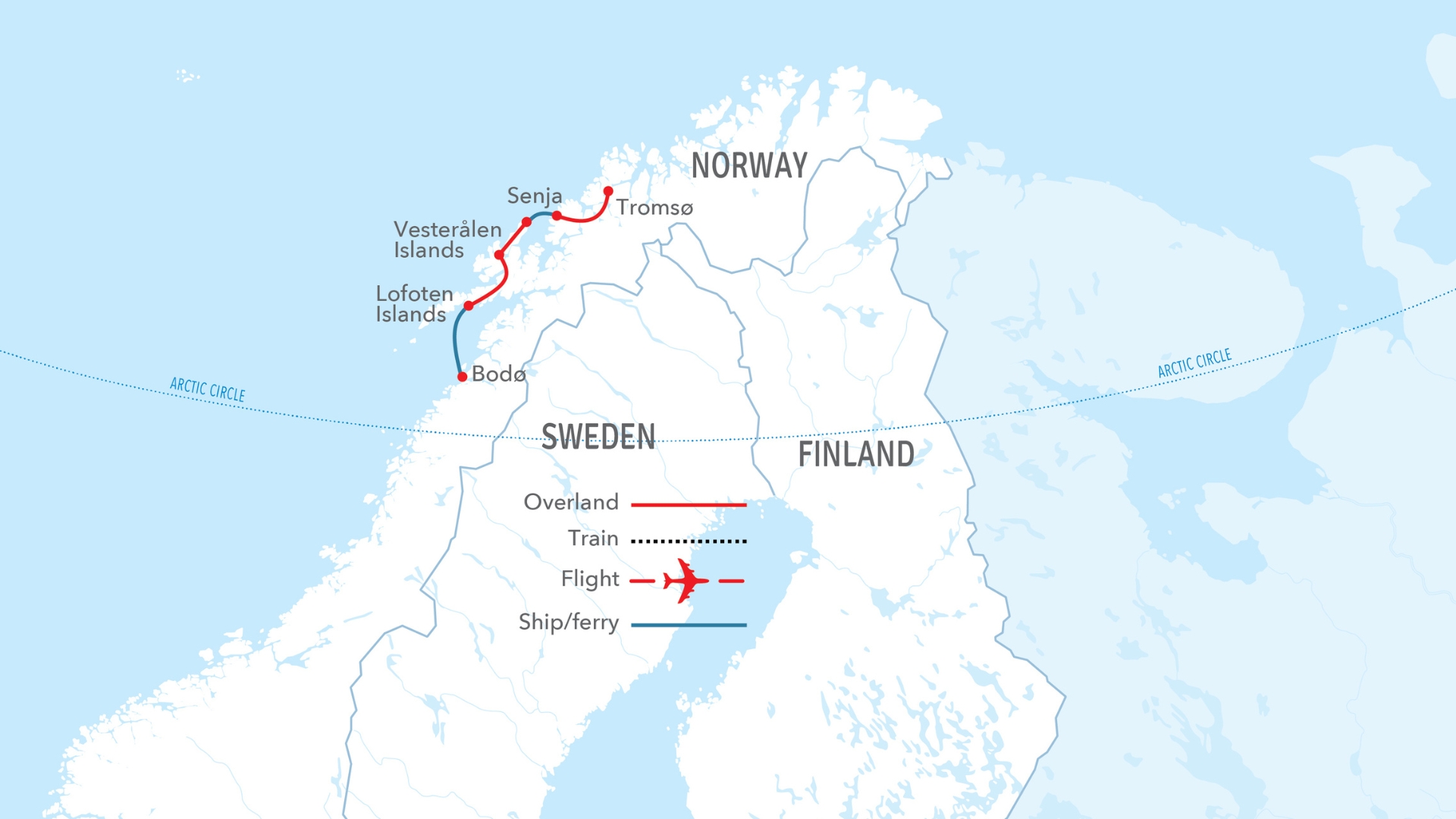
This journey through Northern Norway follows one of the country’s most distinctive travel corridors, connecting Bodø, the Lofoten archipelago, Vesterålen, Senja and Tromsø.
Moving by a combination of road and sea, the route reveals how closely the region’s communities are shaped by the coastline. Bridges and ferries replace long inland drives, and travel becomes part of the experience rather than simply a way to reach the next stop.
Rather than attempting to cover all of Norway, this route stays entirely within the north. The result is a deeper, more coherent understanding of place and a rhythm of travel that feels natural to the landscape.
Bodø – where land meets powerful water
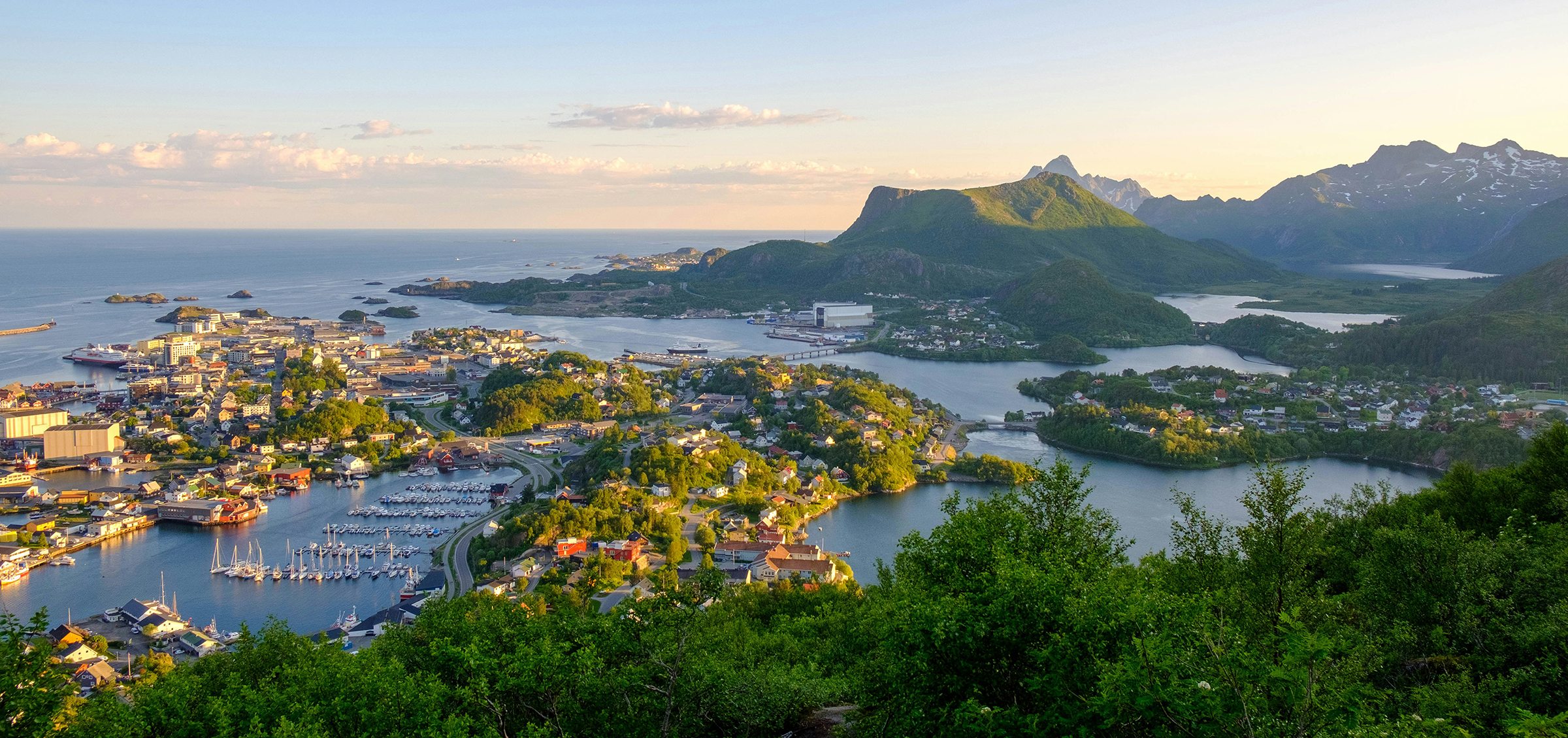
Bodø is often the natural starting point for journeys into Northern Norway.
Set beside open ocean and powerful tidal currents, it introduces travellers to the forces that shape life along the northern coast. The surrounding landscape feels expansive and exposed, with wide skies, shifting weather and a constant presence of the sea.
Bodø offers an accessible gateway into the far north while retaining a distinctly regional character.

Image: Tommy Andreassen - www.nordnorge.com
Lofoten – dramatic islands and everyday coastal life
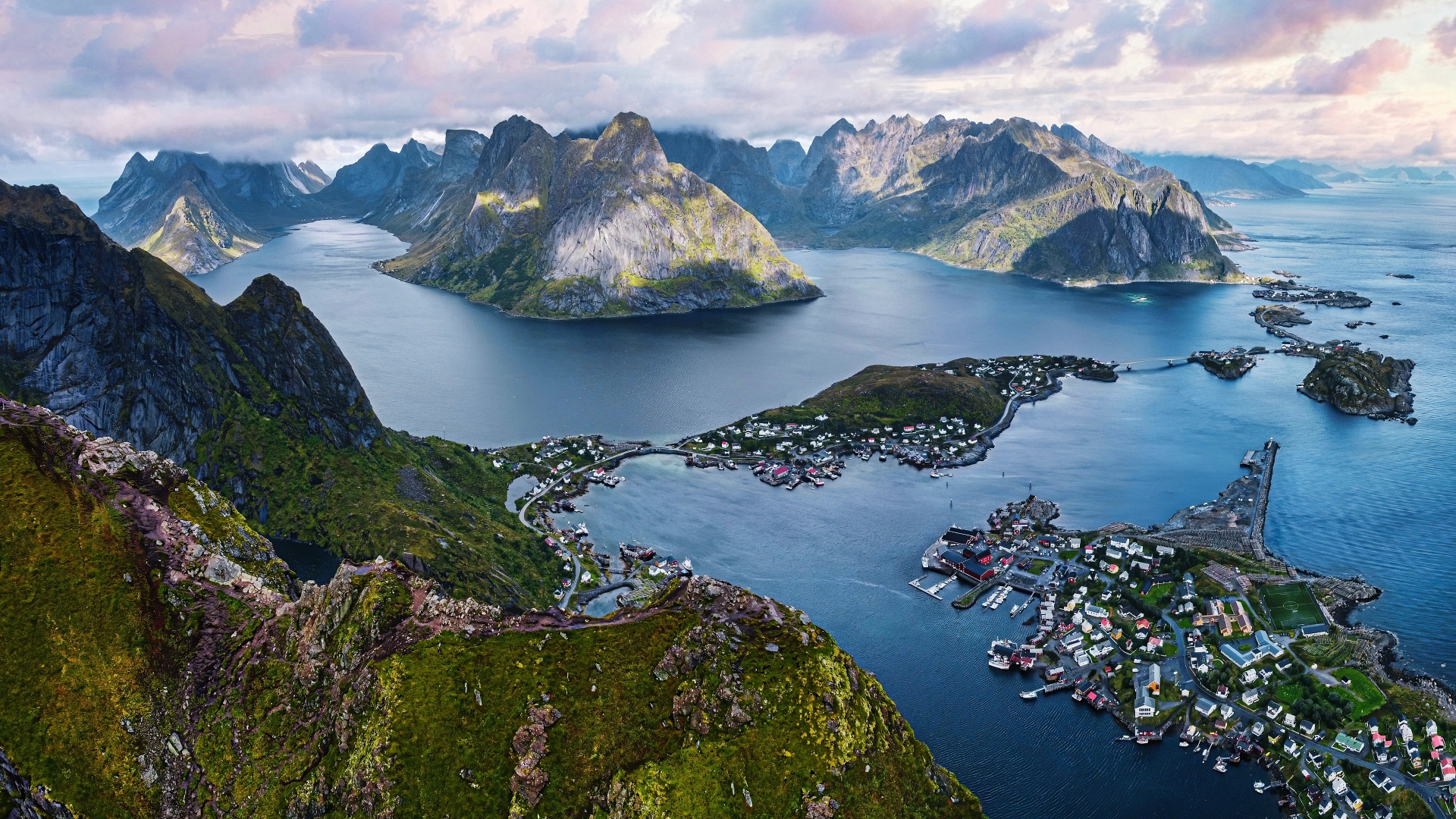
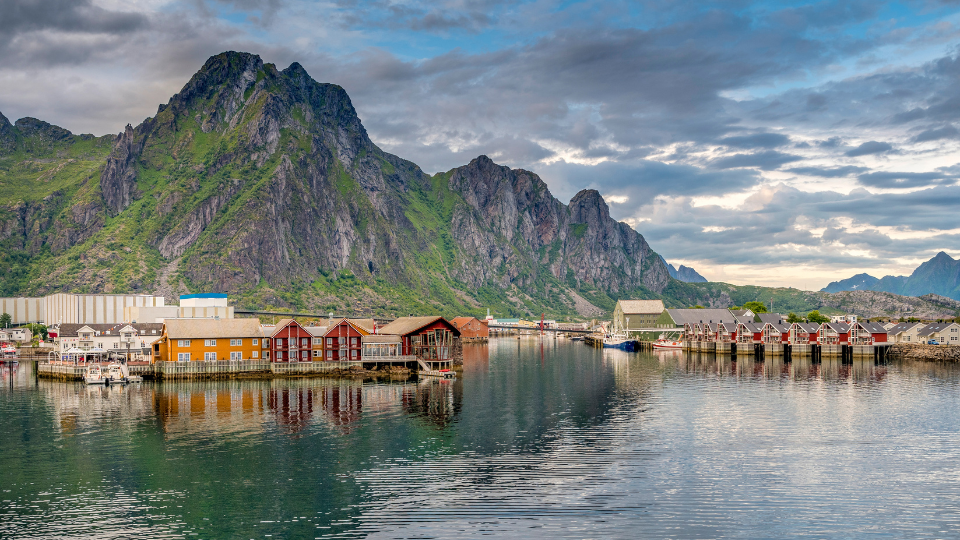
The Lofoten archipelago is known for its sharp granite peaks rising directly from the sea, yet its identity is equally defined by the fishing villages that sit quietly along narrow harbours.
Here, daily life continues at a gentle pace among drying racks for stockfish, small boats returning to the quay and houses perched close to the water’s edge. White-sand beaches, sheltered coves and short walking trails sit only minutes from working communities.
Lofoten combines some of Norway’s most recognisable scenery with a strong sense of continuity and local culture.
Vesterålen – open space and a quieter rhythm
Just north of Lofoten, Vesterålen offers a noticeably different atmosphere.
The landscape opens out. Mountains become softer and more rounded, farmland appears between coastal inlets, and villages feel more dispersed. Tourism remains lighter here, allowing travellers to experience a slower rhythm and a closer connection to both land and sea.
Food and daily life in Vesterålen remain closely tied to season and environment, with fishing, farming and coastal traditions shaping everyday routines across the islands.
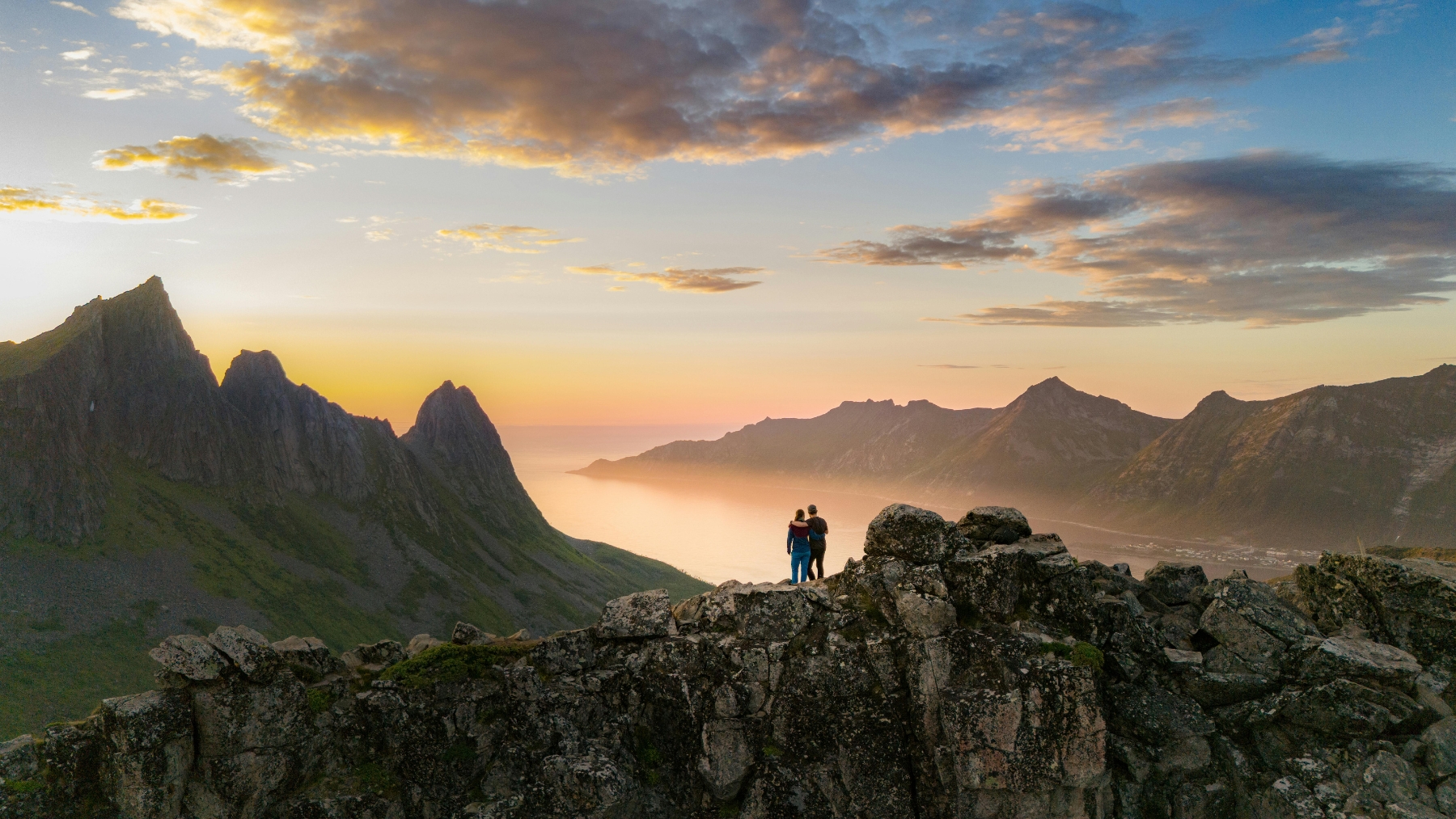
Senja – wild coastlines and a feeling of space
Senja feels more remote again, defined by dramatic coastal roads, steep cliffs and deeply indented fjords.
Often described as ‘Norway in miniature’, the island brings together many of the country’s best-known landscapes in one compact region, yet without the busier atmosphere found further south.
Here, travel is shaped by long views across open water, quiet roadside viewpoints and the constant presence of wind, light and changing cloud.
Tromsø – the cultural heart of the Arctic north
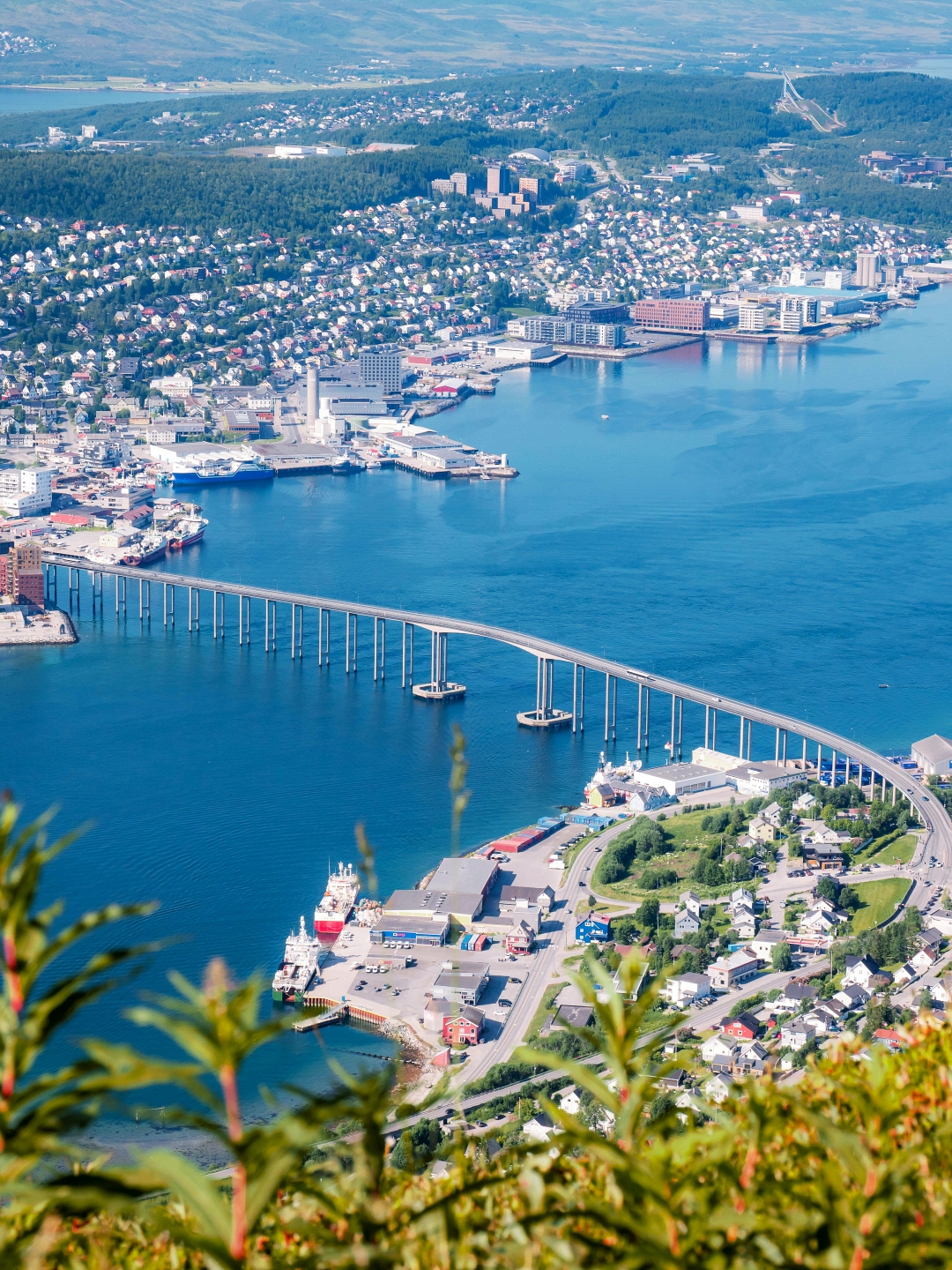
At the northern end of the route lies Tromsø, a lively coastal city with a long history of Arctic exploration, fishing and trade.
Today, it combines a strong cultural scene with university life, restaurants and museums, all set against a backdrop of mountains and water. Tromsø provides a natural point of arrival or departure and a contrasting urban layer to an otherwise island-focused journey.
What this journey feels like
More than any single attraction, it is the rhythm of travel that defines this route.
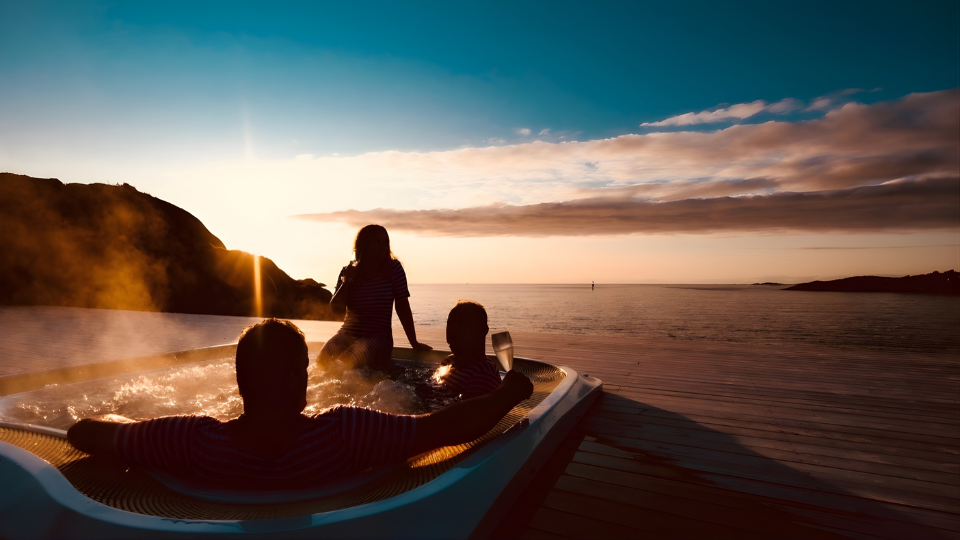
The extended daylight of Arctic summer brings a noticeably different pace. There is time to linger over meals, pause without watching the clock and spend evenings outdoors as soft light glows across fjords and mountains. In places such as Senja, it is not unusual to find yourself outside late at night, watching subtle shifts of colour while the sun still hangs above the horizon.
Short sea crossings, scenic coastal drives and time spent in small communities create space to observe how life is lived in the north. Weather and light influence plans, encouraging flexibility and a deeper appreciation of slower travel.
Travellers who choose this route often describe it as unexpectedly restorative, a journey that stays with them long after they return home.
Food, culture and connection to place
Across Northern Norway, food is closely tied to season and location.
Seafood arrives directly from nearby waters, local farms supply produce adapted to northern growing conditions, and traditional methods of preserving and preparing food remain visible in everyday life.
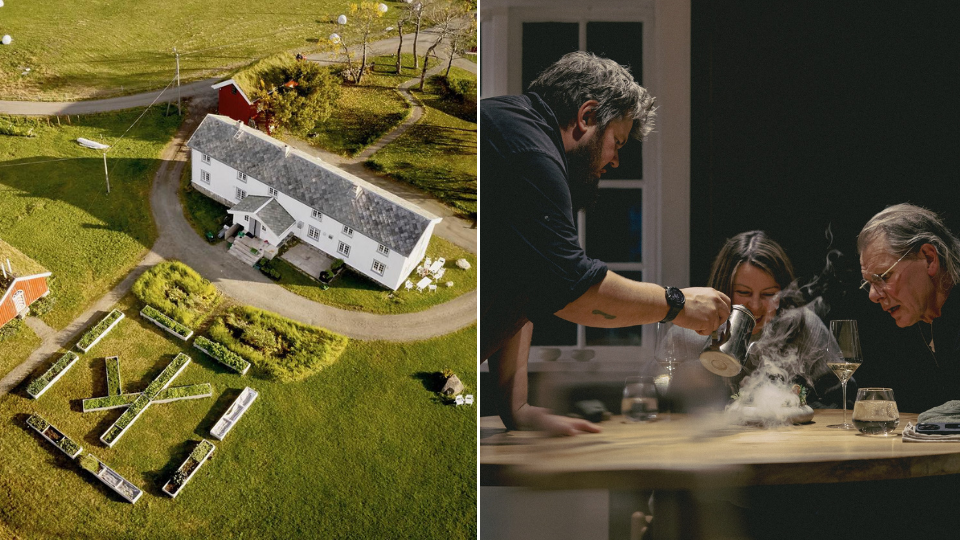
From simple local tastings in fishing villages to standout farm-to-table experiences where ingredients are grown, raised or caught nearby, meals become an important way of understanding the relationship between people, landscape and season.
Travelling this route
This journey through Northern Norway and Lofoten can be experienced in several ways, including as a self-drive route, by combining coastal sailings with land travel, or as part of a guided journey.
When experienced as a guided small-group journey, logistics become smoother and the focus remains on the landscape, light and rhythm of travel rather than daily planning. There is space for individual moments alongside shared experiences, supported by local knowledge and thoughtful pacing.
What matters most is allowing enough time to move slowly between places and to notice the subtle differences between each island group and coastal community.
For many travellers, this part of Northern Norway becomes the most memorable journey of their European travels, not because of what is seen, but because of how it feels to be there.
A journey shaped by light and landscape
For travellers who have already explored much of Europe, this northern coastal route offers something genuinely different.
It is not defined by landmarks alone, but by atmosphere. By the way the light softens the edges of mountains late at night. By the quiet routines of harbour life. And by the deep sense of space that comes from travelling along one of Europe’s most distinctive and least hurried coastlines.
A journey through Northern Norway and Lofoten is, above all, an invitation to experience the far north as it truly is: lived in, working, welcoming and quietly extraordinary.
See the full Summer Journey in Northern Norway & Lofoten itinerary.
About the author
Satu Vänskä-Westgarth is Director of Product at 50 Degrees North. Finnish, and living in Norway for close to 20 years, she has worked across the travel industry from raft guiding and travel writing to product strategy, and designs the company's Nordic journeys around authentic, local experiences. A keen photographer, she travels widely across the north, from Lofoten to the Faroe Islands and Greenland. Read more about Satu.