
Autumn northern lights in Lapland: why September and October deserve your attention

The aurora season is longer than most people think. And with solar activity expected to remain elevated through 2026 and into 2027, the window is wider than usual. Here is why autumn in Lapland deserves a second look.
Most people planning a northern lights trip to Lapland reach for January or February without much deliberation. The assumption is straightforward: the deeper into winter, the better the chances. The reality is more considered than that, and for travellers willing to look at the calendar differently, autumn offers a compelling case.
The science, briefly
Two things happen around the autumn equinox in late September that work in favour of aurora watchers. The first is to do with the angle at which Earth meets the sun's energy at this time of year. Around the equinoxes, in March and September, Earth's magnetic field is better positioned to channel solar energy toward the poles, and the result is more frequent and more intense aurora activity than the depths of winter typically produces. It sounds counterintuitive, but the data bears it out consistently across decades of observation.
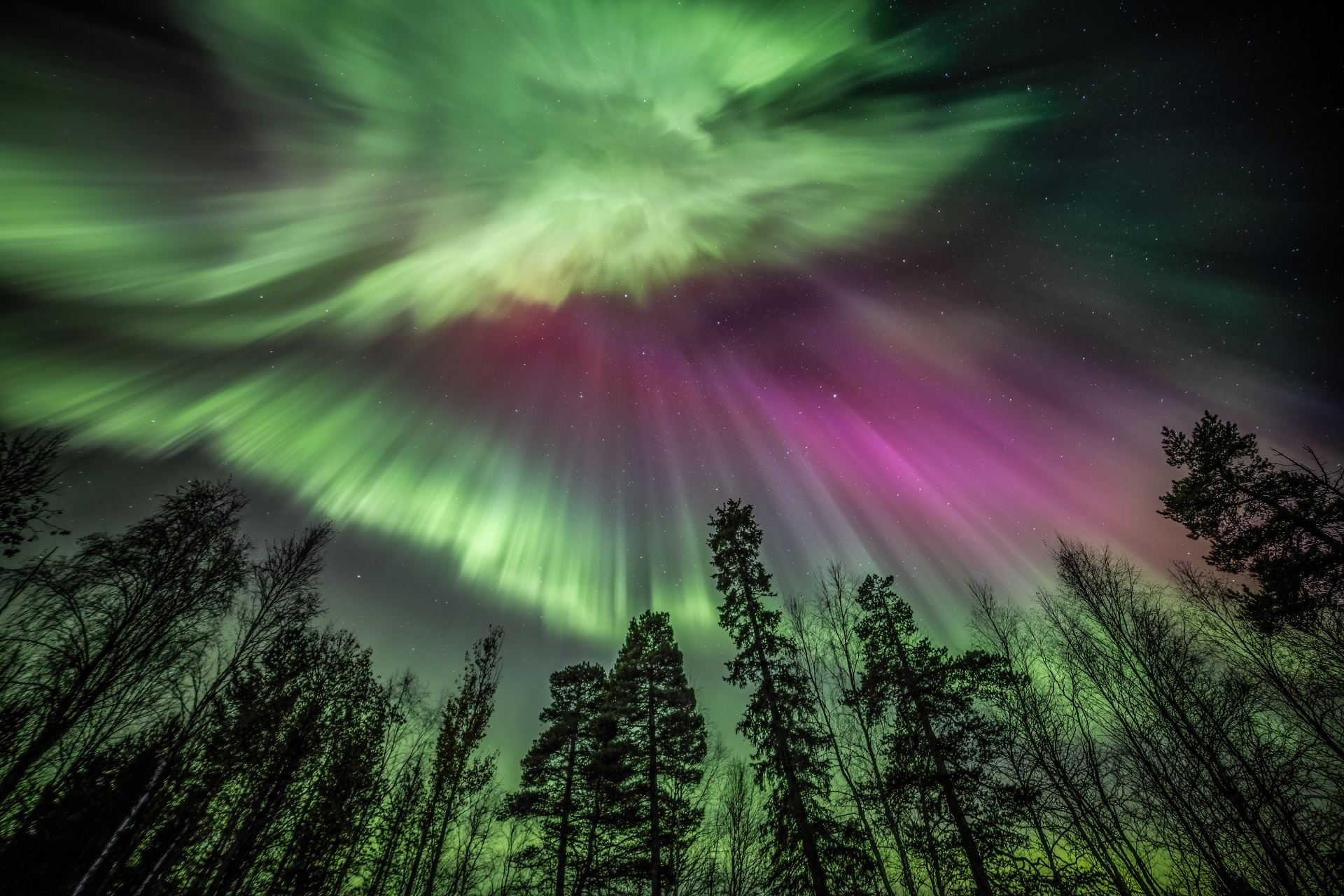
The second factor is specific to 2026 and 2027. Solar Cycle 25, which began in 2019, has been one of the most active in two decades, producing unusually strong and frequent aurora displays across 2024 and 2025. The cycle has now passed its peak, but this is not a reason to look away. In the years following a solar peak, the sun tends to produce some of its most dramatic outbursts, powerful eruptions that, if directed toward Earth, can trigger aurora displays visible far beyond the polar regions. Scientists predict this kind of activity is likely to continue through 2026 and into 2027. Aurora sightings have already reached as far south as Australia, New Zealand and the Mediterranean during moderate activity in recent years. For travellers heading to Finnish, Swedish or Norwegian Lapland in autumn 2026, the timing is, by any measure, unusually good.
What autumn actually looks like in Lapland
The practical experience of being in Lapland in autumn is quite different from winter, and for many travellers (especially those unused to snowy winters), preferable.
Temperatures in September sit between 0 and 10 degrees across Finnish and Norwegian Lapland, cold enough to feel genuinely Arctic but manageable without extreme cold weather gear. October runs slightly colder, with overnight temperatures regularly below zero, but still far removed from the minus 20 or 30 degrees that midwinter can bring.
The nights darken quickly from mid-September. By the equinox, you have five to six hours of genuine darkness each night, enough for meaningful aurora hunting without the near-total darkness of December and January, which some travellers find disorienting.
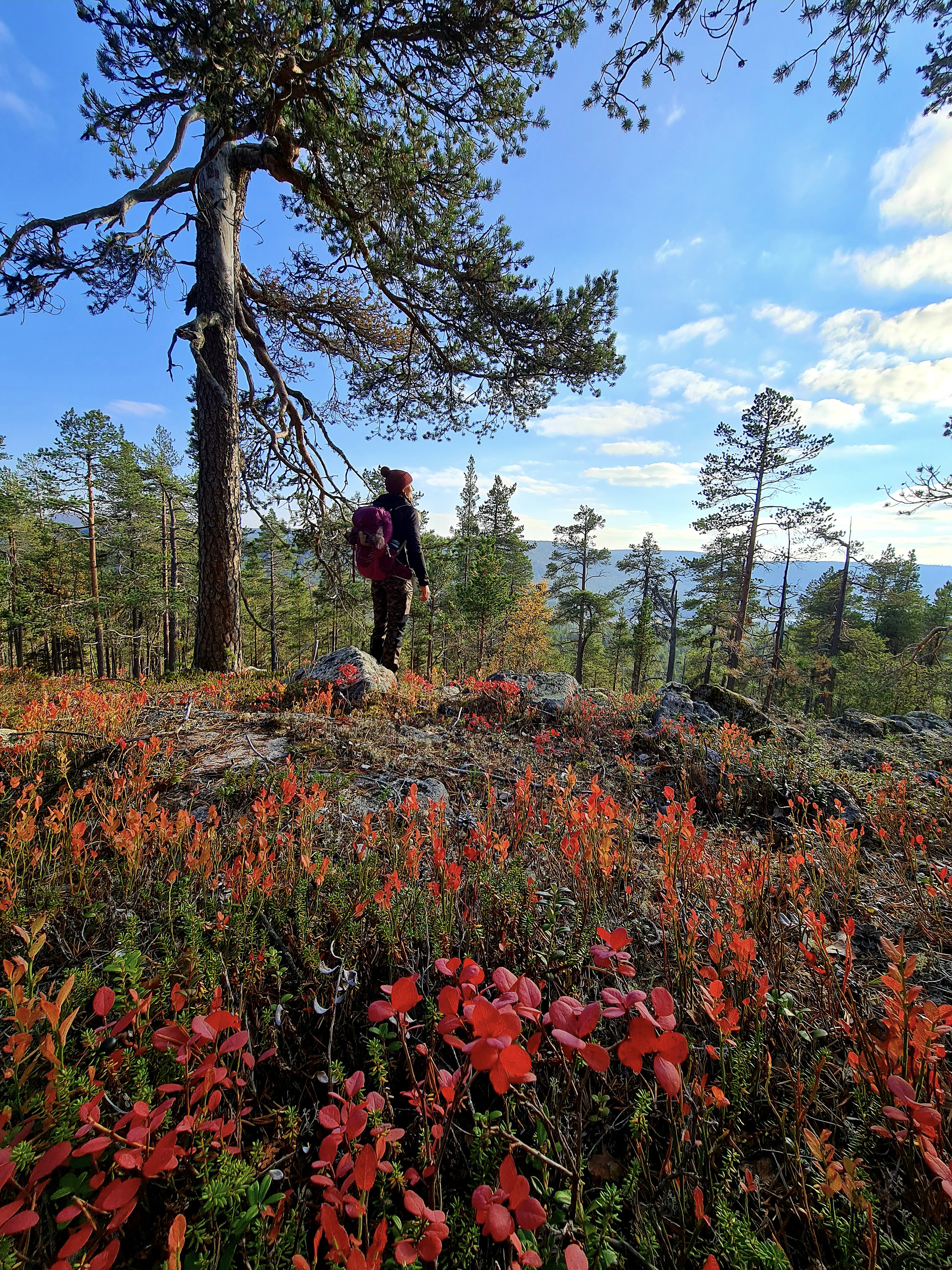
And the landscape in September and early October transforms in ways that winter simply does not offer. In Finnish, the word ruska describes the moment the birch and rowan forests turn gold and amber before the first snows arrive. It is brief, vivid, and entirely absent from the winter experience. Travelling through Lapland during ruska, whether on a husky wagon ride, a hike in a national park, or a drive along a lake road, is a different kind of beauty from what snow and ice offer. Award-winning travel writer Rob McFarland, who explored Swedish Lapland with 50 Degrees North, described the region as being "even more magical in autumn", noting the slower pace, design-led stays and deep connection to nature that define the season.
Autumn northern lights journeys with 50 Degrees North
50 Degrees North operates a range of independent and small group journeys above the Arctic Circle during the autumn months. Each is designed around the specific conditions and character of the season.
Independent journeys
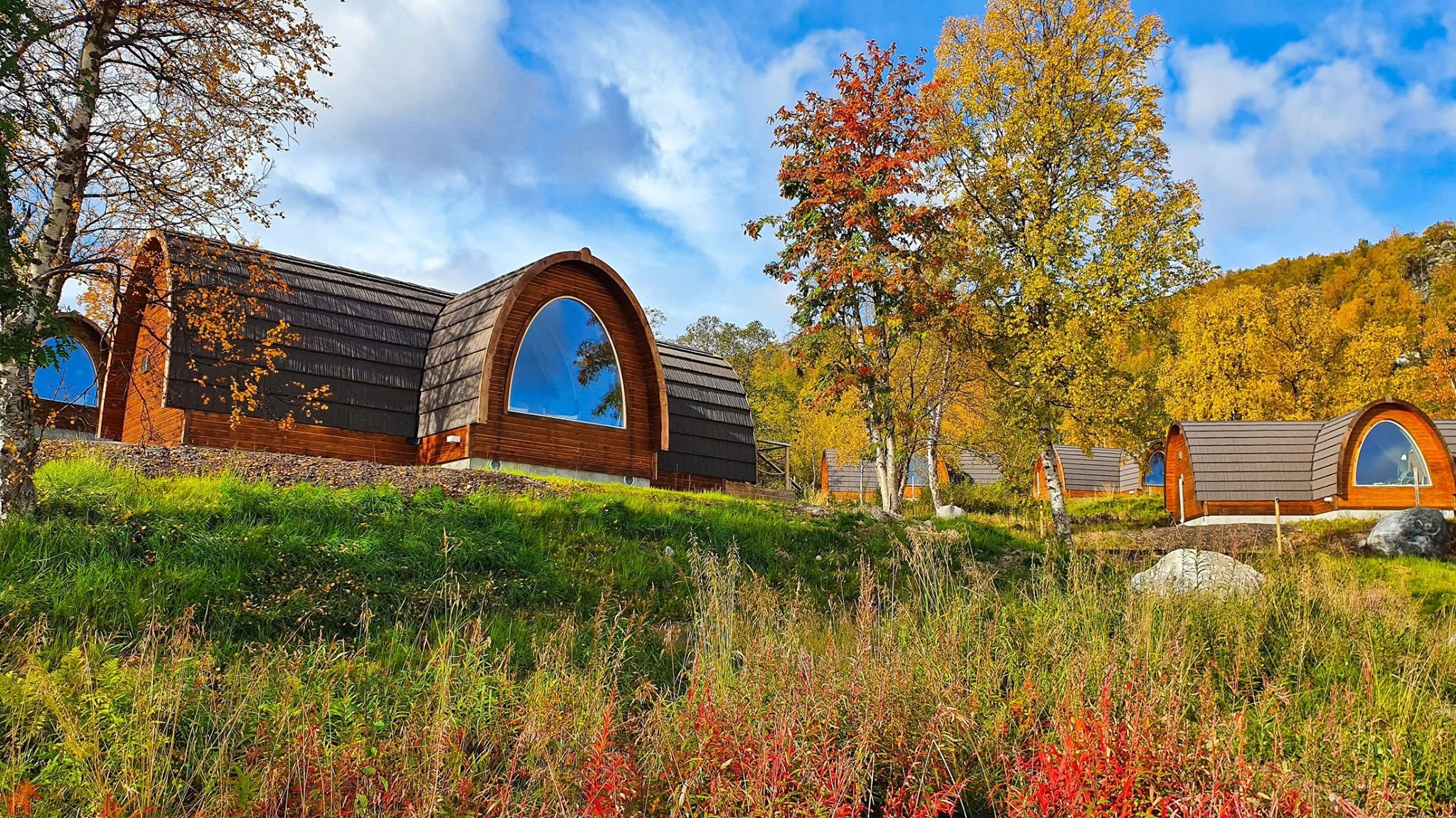
Aurora Highlights in Autumn is a 7-day journey from Ivalo in Finnish Lapland to Kirkenes in Arctic Norway, available 1 September to 27 October 2026. Four nights at Aurora Village in glass-roofed Aurora Cabins are followed by two nights in Gamme log cabins at Snow Resort Kirkenes. Activities include aurora hunting by car, a husky wagon ride, a visit to the Sámi museum Siida, hiking in Urho Kekkonen National Park, a fat bike tour or Arctic stargazing session, a king crab safari and a husky mountain hike in Kirkenes. Every booking includes a Northern Lights Money-Back Guarantee: if no northern lights are seen at either destination during the trip, a fixed accommodation refund applies.

Autumn Northern Lights in the Arctic is a 6-day Premium journey from Kilpisjärvi in Finnish Lapland to Tromsø in Arctic Norway, available August to October. Three nights at Cahkal Hotel, a 23-room boutique wilderness retreat named Best Luxury Boutique Hotel in Lapland at the European Travel Awards 2025, are paired with a Sámi-led reindeer hike, daily sauna rituals overlooking Saana fell, an e-fatbike adventure through the tundra, and a northern lights excursion by car in September and October departures. The journey ends with two nights in Tromsø, including a scenic fjord cruise and a guided city walk.

Autumn Aurora Safari in Swedish Lapland is a 5-day journey from Kiruna to Luleå, available September to November. The itinerary combines two of Swedish Lapland's most distinctive stays, a night in an art suite at ICEHOTEL in Jukkasjärvi and two nights at Treehotel in Harads, with a northern lights dinner, an ice sculpting class, a scenic SJ rail journey through the autumn landscape, two hours in the Forest Spa, and a visit to Storforsen Nature Reserve, home to Europe's largest unregulated rapids.
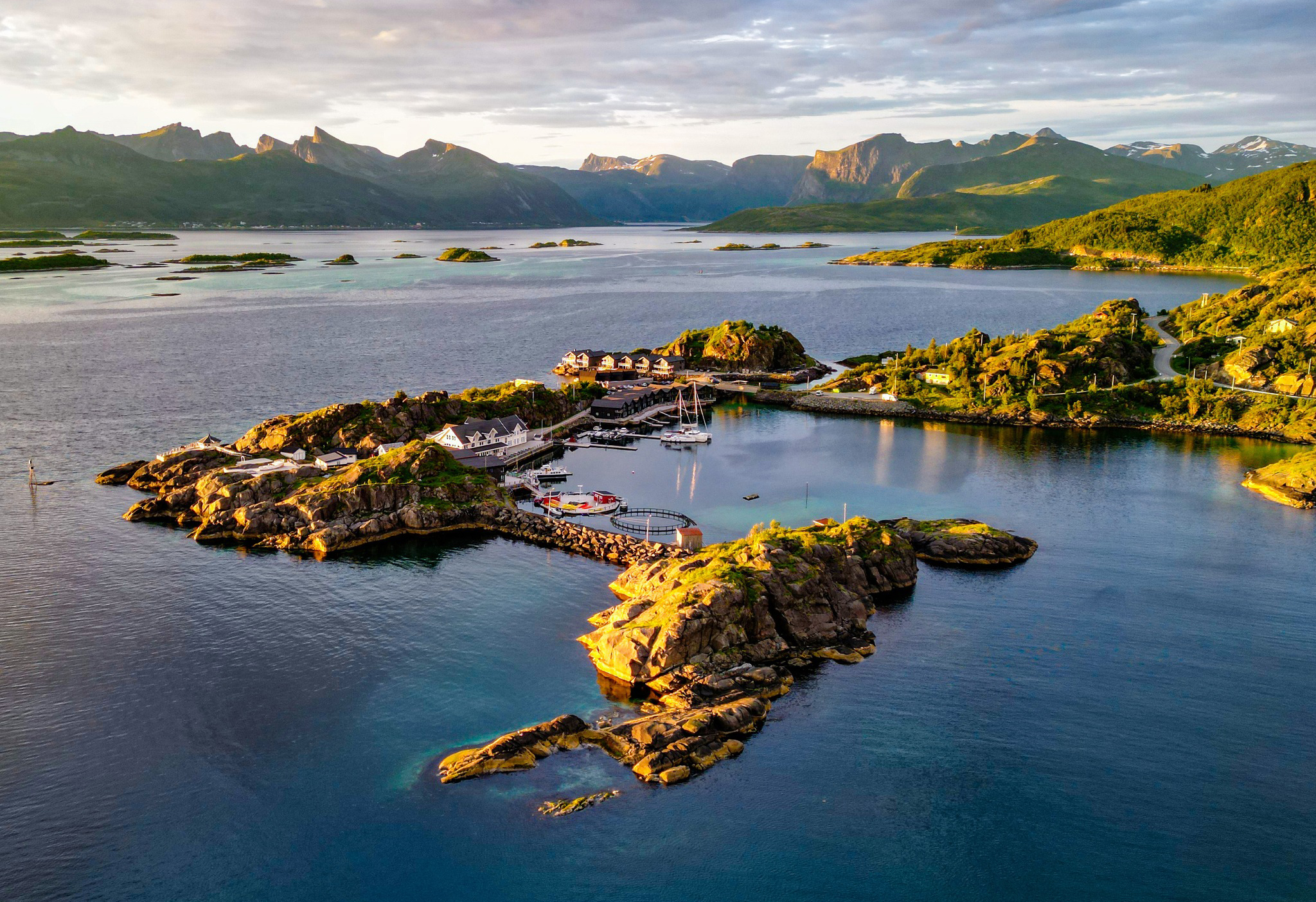
Autumn Senja, Wildlife and Auroras is a 5-day journey based at Hamn i Senja on Norway's remote Senja island, available September to November. Starting and ending in Tromsø, the journey includes a guided Arctic city walk, an express boat to Senja, a fjord sightseeing and wildlife safari with sea eagles and seals, a northern lights photo tour, body rafting in an Arctic maelstrom, and time in an outdoor hot tub overlooking the fjord.
Autumn Tranquility in Alta is a 5-day journey based at Sorrisniva Arctic Wilderness Lodge on the banks of the Alta River, available September to October. Considered by many locals to be the best Arctic season in Alta, the journey includes northern lights hunting, a king crab safari, a Sámi cultural introduction, and fine dining at the lodge restaurant, which draws on the surrounding wilderness for its seasonal menu.

Rovaniemi and Glass Igloo Escape in the Autumn is a 6-day journey from Rovaniemi to Luosto in Finnish Lapland, available September to November. The itinerary combines time in Rovaniemi, the capital of Finnish Lapland and home of Santa Claus Village, with a retreat in the peaceful village of Luosto. Highlights include a reindeer farm visit with a local photographer, a guided hike to a sacred waterfall, a cultural workshop on Eastern Lapland traditions, a northern lights excursion by car, and a night in a panoramic glass igloo.

Small group departures
For travellers who prefer a guided group experience, Aurora Village in Ivalo and Snow Resort Kirkenes also feature in three small group departures led by a dedicated 50 Degrees North tour leader. Experience the Northern Lights is a 15-day journey from Oslo to Ivalo via a northbound Havila coastal voyage, with autumn activities including husky wagon rides, reindeer feeding, sauna experiences and aurora hunting by car. Chase the Northern Lights Express is an 11-day journey from Ivalo to Bergen, combining three nights at Aurora Village with one night in a Gamme cabin in Kirkenes and five nights on a southbound Havila coastal voyage, with the same autumn activities and a king crab safari. Iconic Northern Lights is an 8-day journey from Bodø to Kiruna, covering the Lofoten Islands, a coastal voyage, ICEHOTEL and Sámi cultural experiences, with scheduled autumn departures.

Planning your autumn northern lights trip
A few practical notes for travellers and advisors:
- Mid-September to mid-October is the optimal window, combining the equinox aurora peak with the ruska landscape
- Clear skies matter more than any other single factor. Lapland's inland areas, including Ivalo and Kilpisjärvi, tend to have more stable weather than the Norwegian coast in autumn
- Aurora Alert apps and on-site sky cameras at properties like Aurora Village significantly improve sighting chances by notifying guests in real time
- Autumn departures tend to book later than winter, meaning availability is often better and prices can be more competitive
- The current solar cycle is producing unusually strong aurora activity through 2026 and potentially into 2027, a window that may not repeat until the mid-2030s
To explore all autumn journeys, visit fiftydegreesnorth.com/styles/off-season-fall-autumn.
About the author
Terhi Runnalls grew up in Finland and works in marketing and communications at 50 Degrees North. She has travelled widely across the Nordic region and the Baltics, and writes about Finland and the wider Nordic region from first-hand experience. Read more about Terhi.