
What AI gets wrong about travel planning

AI can build a holiday itinerary in seconds, but it cannot replace the local knowledge, judgement and experience that turn a list of destinations into a journey that works.
There's something very tempting about asking an AI to plan your holiday. You describe a destination, a rough budget, a few preferences, and within seconds a detailed itinerary appears, complete with restaurant names, opening hours and notes about which ferry to take across the fjord. It feels organised. It feels considered.
And AI can be genuinely useful for travel. It can help you understand a destination, compare different regions, build a rough itinerary and turn a long list of possibilities into something manageable.
But the ease of it is also the problem. Travel, at its best, is a practice of encounter with the genuinely unfamiliar. AI, at its best, is a powerful tool for finding and organising information. But AI doesn't automatically know which information is current, which sources are reliable, or what a particular place actually feels like on the ground.
That distinction matters particularly in the Nordics, where weather, seasonality, transport, terrain and local knowledge can fundamentally change what is practical, accessible or worth doing.
The collision between these two facts produces a set of pitfalls worth understanding before you hand your holiday over to a language model.

The confidence gap: AI can make outdated travel information sound authoritative
AI answers travel questions in a remarkably confident tone, regardless of how reliable the underlying information actually is. A restaurant in Helsinki that closed two years ago can receive the same polished recommendation as one that opened last month. A Norwegian stave church that now requires advance booking may be described as a walk-in. A quiet fishing village on the Swedish west coast that has become a busy summer destination can still be presented through the lens of a travel article written when it was largely undiscovered.
The problem isn't simply that AI can be wrong. It is that fluent language can make an uncertain answer sound authoritative.
Even when an AI system has access to current information, it can combine sources of different ages, misunderstand context, or repeat a claim that has been copied across multiple websites. The fact that something appears repeatedly online doesn't necessarily make it accurate.
A traveller doesn't necessarily need an answer that sounds plausible. They need an answer that is true, current and relevant to their particular journey.

Repetition is not verification: how travel myths become “facts”
The problem can start before AI ever enters the picture.
The internet is full of travel information that has been copied, simplified and republished until the original context disappears. A claim can become so familiar that it starts to look like established fact simply because it appears everywhere.
Sommarøy, a small island outside Tromsø in northern Norway, is a useful example.
The island has become internationally associated with the idea that it's a place where “time doesn't exist”, following a 2019 tourism campaign built around a proposal to make Sommarøy a “time-free zone” during the period of midnight sun. The story was widely reported and became part of the destination's online mythology.
It has continued to circulate long after the original campaign. Videos and articles repeatedly describe Sommarøy as the place where time doesn't exist, often accompanied by spectacular Nordic footage. Yet much of the footage used in videos about the story appears to come from elsewhere in the Nordic region rather than Sommarøy itself.
The original social media video that helped popularise the story is no longer available, but versions of the claim have been replicated endlessly online.
That matters because repetition can look remarkably like verification.
An AI asked about Sommarøy may encounter many versions of the same story. It can then synthesise those sources into a fluent explanation that sounds authoritative. But if all those sources ultimately trace back to the same campaign, repeating the claim doesn't make it true.
This is one of the less obvious problems with AI travel research. AI can be very good at finding patterns in information. But when the information ecosystem contains a widely repeated misconception, pattern recognition can reinforce the misconception rather than correct it.
The same dynamic can turn outdated information into seemingly current advice: a restaurant that was fashionable years ago can remain a perennial recommendation, a viewpoint that is now crowded can still be described as a hidden gem, and an experience that only operates in a particular season can appear to be available year-round.
The internet contains an enormous amount of travel information. It doesn't contain an equally enormous amount of independent travel knowledge.
The aggregation problem: AI tends to recommend what is already well documented
AI-generated itineraries are assembled from the aggregate of what has been written about a place. They reflect what is most frequently documented, not necessarily what is most worth experiencing.
The result is itineraries that cluster around the same landmarks, the same restaurants and the same viewpoints that travel publications have covered at length.
The Geirangerfjord is on countless Norway itineraries for good reason. But an AI has no inherent mechanism for asking what you might find more interesting than the obvious things, or for recognising that the famous viewpoint may be overwhelmed by coach tourists on the particular day you visit while something quieter is happening along an unmarked trail above.
The places that tend to matter most to travellers are often the ones least written about.
There is a feedback loop here, too. The places that are written about most become easier for AI to recommend. Those recommendations send more travellers to the same places, generating more content about them, which makes them even easier to recommend.
What looks like an independent recommendation may therefore simply be the accumulated weight of online attention.
The missing layer: AI cannot experience a place or understand how it feels on the ground
A well-planned travel day accounts for how the body actually moves through space: the energy cost of a long coastal hike before lunch, the way midsummer light in Scandinavia distorts your sense of time, the simple fact that crossing a Nordic city can take longer than a map suggests.
AI itineraries tend to underestimate transition time and overestimate what is achievable in a given number of hours.
Ferry and bus schedules in remote areas of Norway or the Finnish archipelago are a persistent blind spot. An AI might schedule a morning island visit and an afternoon market on opposite shores of a lake with a confident transit note between them, without accounting for a boat running late, a path being longer than marked, or the traveller simply wanting to stop and watch the light change.
This is where current, first-hand information matters.
For Norwegian public transport, Entur provides current journey planning and transport information. For self-drive journeys, the Norwegian Public Roads Administration provides information about roads and traffic conditions.
These sources answer an important practical question that an AI-generated itinerary cannot always answer reliably: what is actually possible today, in this season, under these conditions?
That quality of physical intelligence – knowing what movement actually feels like in a specific landscape – cannot be fully replicated from text.

Personalisation has limits: AI knows your preferences, but not what you will actually enjoy
AI systems are skilled at the appearance of personalisation.
Mention that you want something off the beaten track in Lapland, and the itinerary will include reindeer farms and aurora viewing lodges. Tell it that you like food and nature, and it can quickly assemble restaurants, markets, hikes and scenic experiences around those interests.
This is useful as a starting point. But there is a difference between incorporating stated preferences into a template and actually knowing what a specific traveller will find worth their time on a specific evening in Tromsø in late January.
The recommendations remain, at root, generic.
They are the intersection of your stated preferences and the set of places that have been written about in connection with those preferences.
The small-batch rye distillery that a local community of enthusiasts knows about, the specific forest track that experienced cross-country skiers prefer, the family sauna on a private island reached only by prior arrangement: none of these necessarily surface.
AI can personalise the familiar. It cannot reliably find the unfamiliar on your behalf.

No one is accountable when an AI recommendation goes wrong
When a trusted friend recommends a restaurant in Copenhagen and it disappoints, there is a relationship in which that disappointment can register. The friend updates their understanding of your tastes; you update your reading of their recommendations.
When an AI recommends a restaurant and it disappoints, nothing changes. The next person to ask may receive the same recommendation.
This shapes the nature of the advice in a way that is easy to underestimate.
Human recommenders, particularly those with local knowledge and a stake in your experience, curate carefully because their credibility depends on it. A destination specialist has a reason to know whether an experience is genuinely suitable, whether a supplier is reliable and whether an itinerary works in practice.
AI recommends without consequence.
Abundance of suggestions is not the same thing as reliability.

Where AI helps: use it for orientation, not as your final source of truth
None of this means you should stop using AI to research travel.
Used with a clear sense of its limitations, AI is a genuinely useful tool. It can compress the early-stage research that would otherwise take hours.
Ask it to explain the differences between regions. Use it to build a rough mental map of a destination. Ask it to compare different ways of travelling between two places. Give it your interests and ask it to suggest questions or experiences worth investigating.
It is particularly good at orientation: understanding the general character of different regions, grasping what to expect from the pace of life in rural Sweden compared to central Stockholm, or getting an initial sense of whether a trip should focus on fjords, cities, the Arctic or the archipelago.
The distinction worth making is between orientation and verification.
Use AI to help you work out what you want to investigate. Then go to the original source for the details that matter.
| Task | How to use AI |
|---|---|
| Understanding Scandinavian rail networks and pass options | Useful for orientation, verify current routes and conditions |
| Comparing ferry routes across the Norwegian coast | Useful for initial planning, verify timetables |
| Knowing which Finnish islands are accessible without a private boat | Useful starting point, verify locally |
| Current opening hours, prices and booking requirements | Always check the original source |
| Restaurant recommendations | Use as a starting point, prioritise current local sources |
| Route planning for self-drives in complex terrain | Cross-check with official road information and local expertise |
| Recent changes to visa or entry requirements | Check official government sources only |
And when AI gives you a recommendation, ask where it came from.
A recommendation without a source is a suggestion, not evidence.

What a destination specialist knows that AI cannot find online
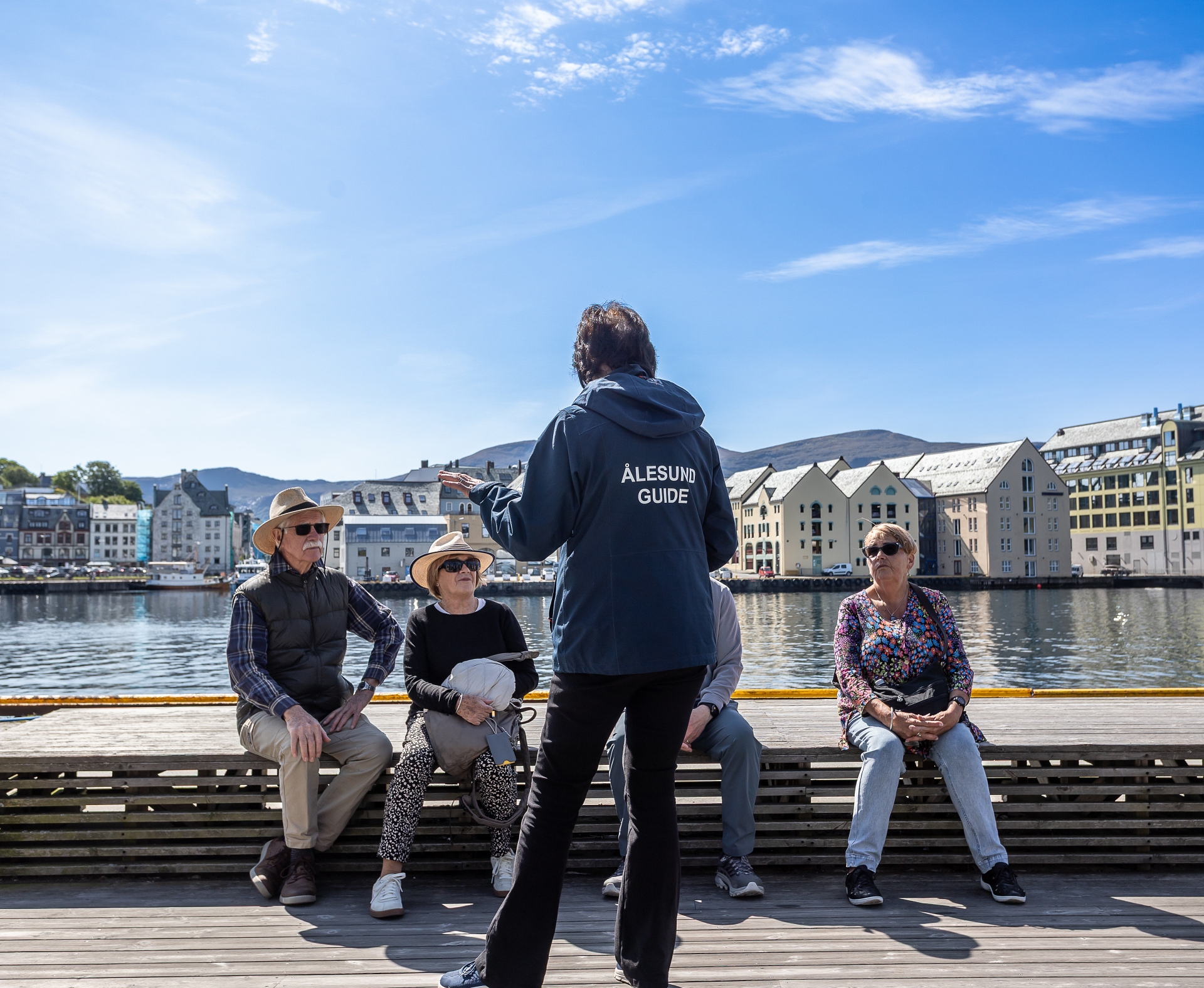
The difference between AI and a destination specialist is not simply that one is digital and the other is human. It is the difference between information synthesis and accumulated knowledge.
Ask an AI to arrange a list of Norwegian destinations into a logical self-drive route and it may produce something that looks reasonable on the page. It may get the broad geography right, placing Bergen before Flåm, Flåm before Fjærland.
But it may not account for the ferry crossings that make one direction of travel far more efficient than the other, the mountain pass that closes in October, the section of road that adds two hours in the wrong season, or the fact that ending in Ålesund rather than starting there changes the entire shape of the week.
The route looks planned. In practice, it can simply be a sequence of names.
A destination specialist who has driven those roads knows which direction a scenic road makes sense, which ferry connection has only two departures a day, and where to build in a night so the next morning's drive is an hour rather than four.
That knowledge does not come from having read about Norway. It comes from being there, from experience that accumulates through repetition, relationships and observation.
The same principle applies to everything else AI can get wrong: the restaurant that closed, the viewpoint now overrun, the small-group experience that does not yet exist online, the guide who does not advertise, or the seasonal difference that changes an experience completely.
A specialist curates from knowledge the internet does not fully contain.
AI can only work with the information available to it.
How to use AI without handing over the whole trip
The most useful way to think about AI in travel may therefore be not as a replacement for expertise, but as a research assistant.
Ask it to challenge your itinerary. Ask what could go wrong. Ask which assumptions need to be verified. Ask it to identify connections that look possible on a map but might be impractical in reality.
Then verify those answers.
Better prompting can reduce some of the problems associated with AI-generated travel advice, but it cannot turn a general-purpose AI system into a substitute for first-hand destination knowledge.
The distinction is not speed. It's depth.
The deeper question: can AI make travel too predictable?
There is a version of this problem that goes beyond practical pitfalls.
Travel is, at some level, about contact with uncertainty, with the disorientation of being somewhere you do not yet know how to read. The Nordic landscape has a quality of scale and quiet that resists being scheduled: the stillness of a Finnish lake at dusk, the way a mountain plateau in central Norway makes you feel both very small and very clear.
An AI itinerary promises to resolve that uncertainty in advance, to turn the unfamiliar into a legible sequence of scheduled activities.
But the planned day that falls apart because the road is still snowed over, and you spend the afternoon in a roadside café talking to the person who runs it, is often the day you remember.
AI cannot plan for that. But it can, if you let it, plan the spontaneity out of existence.
AI can map a destination in remarkable detail. But a map cannot tell you how a journey works on the ground. That takes local knowledge, experience and judgement.

Frequently asked questions
Can AI plan a good trip to Scandinavia?
It can produce a reasonable starting framework, particularly for logistics and orientation. It is less reliable for current information, restaurant recommendations, and anything that benefits from local knowledge. Treat its output as a first draft, not a finished itinerary.
What does AI typically get wrong about Nordic travel?
Transit times and schedules in remote areas can be problematic. Seasonal access, booking requirements and the operating status of smaller attractions may be out of date or incorrectly represented. Route planning in fjord terrain is a particular challenge: two destinations that appear close on a map may require a long drive, a ferry and a mountain crossing to connect.
AI can also route travellers towards the same well-documented places, which may not suit those looking to go further off the beaten track.
Is AI better than a destination specialist for Nordic trips?
For general orientation, AI is fast and broadly useful. For a complex, multi-country itinerary where timing, logistics and on-the-ground knowledge matter, a destination specialist can bring current information, local contacts and direct experience that a language model cannot replicate.
The distinction is not speed. It's depth.
How can I use AI safely when planning a holiday?
Use it for research and orientation, but verify important details with the original source. Check current transport schedules with transport operators, road conditions with relevant authorities, accommodation and experience availability directly with providers, and visa and entry requirements with official government sources.
It is also worth asking AI to identify the sources behind its recommendations rather than accepting an unsourced answer at face value.
Should I use AI to book travel?
Research, yes. Booking, no. Always check availability, prices, cancellation conditions and access requirements directly with the operator or official booking source before committing.
About the author
Satu Vänskä-Westgarth is Director of Product at 50 Degrees North. Finnish, and living in Norway for close to 20 years, she has worked across the travel industry from raft guiding and travel writing to product strategy, and designs the company's Nordic journeys around authentic, local experiences. A keen photographer, she travels widely across the north, from Lofoten to the Faroe Islands and Greenland. Read more about Satu.